

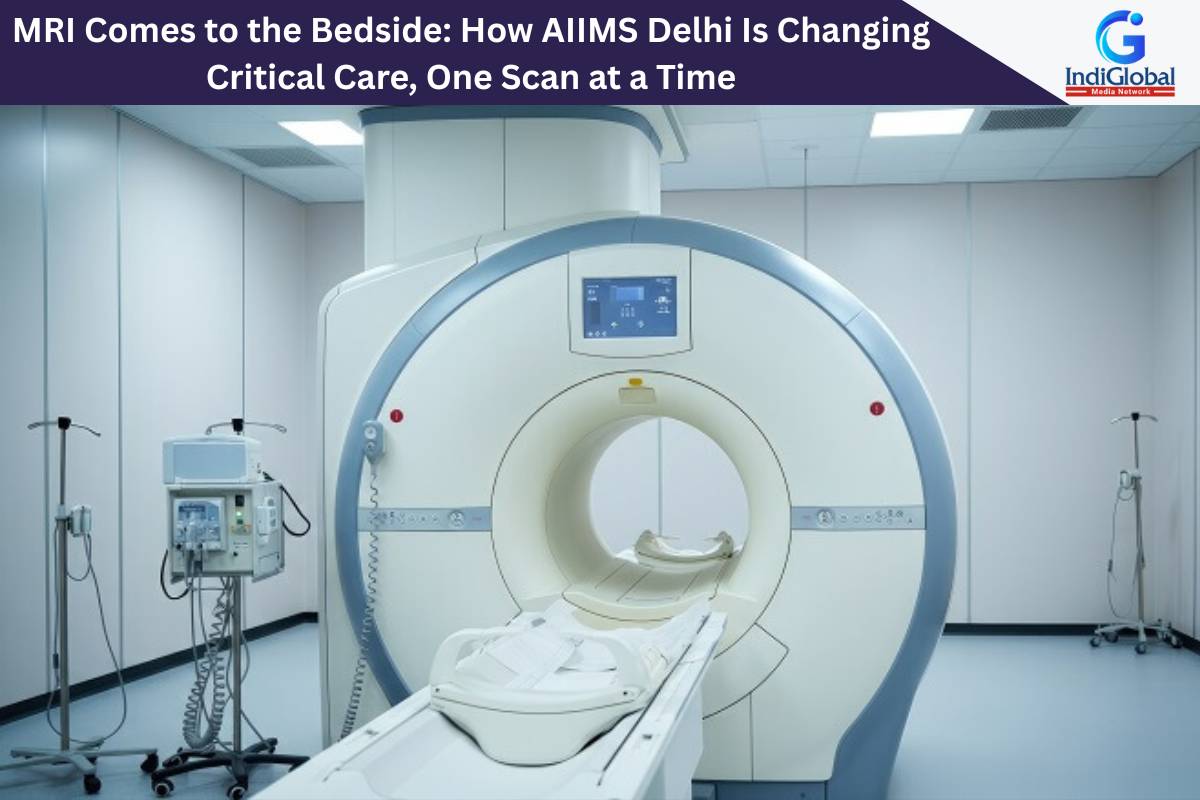
In a quiet but powerful shift in India’s healthcare landscape, All India Institute of Medical Sciences has introduced the country’s first portable MRI system, bringing life-saving brain imaging directly to a patient’s bedside. For critically ill patients and their families, this innovation could mean the difference between delay and timely intervention, between risk and reassurance.
Traditionally, an MRI scan has required patients to be transported, often through long hospital corridors, to specialised imaging rooms. For patients in intensive care units (ICUs), especially those on ventilators or in unstable conditions, this journey can be risky and logistically complex. But with this new portable system, that reality is changing. The machine can now be wheeled directly to the patient, allowing doctors to perform brain scans without moving them at all.
At its core, the innovation is about time and safety. In emergencies such as strokes or traumatic brain injuries, every minute matters. Faster imaging means faster diagnosis, and faster decisions. Doctors at AIIMS say the system enables immediate bedside scans, helping clinicians act quickly in situations where conventional imaging may be delayed or even unsafe.
The technology itself is an ultra-low-field MRI device, smaller, more flexible, and designed specifically for point-of-care use. While it may not replace full-scale MRI machines, it complements them by serving a crucial role in critical care settings. Whether in ICUs, emergency wards, or neurosurgical units, the device allows doctors to monitor brain conditions in real time without disrupting patient care.
For doctors like those at the hospital’s Centre for Neurological Conditions, the impact is already visible. The system is being used to diagnose and monitor strokes, head injuries, paediatric neurological issues, and post-operative cases. In many of these scenarios, even a short delay in imaging can affect outcomes. Now, clinicians can observe changes in the brain almost immediately, without waiting for access to traditional MRI suites.
Beyond the hospital walls, the implications are even broader. India, with its vast population and uneven access to advanced medical infrastructure, has long faced challenges in timely diagnostics. Portable MRI systems could help bridge that gap, bringing advanced imaging to places where traditional machines are impractical. Experts believe this could eventually expand access to neurodiagnostics across the country and strengthen research in this field.
Also Read:- Doctor Explains the ‘Silent Fatty Liver’ Epidemic Among Young Indians and How to Reverse It Naturally
But perhaps the most human impact is felt at the bedside itself. For families watching over loved ones in critical condition, every movement, every procedure can be a source of anxiety. Eliminating the need to transport a fragile patient reduces not just medical risk, but emotional strain as well. It allows care to remain centred, literally and figuratively, around the patient.
In many ways, this innovation is a reminder that progress in medicine isn’t always about bigger machines or more complex procedures. Sometimes, it’s about bringing care closer, making it safer, faster, and more humane.
As AIIMS Delhi leads the way, the question now is not whether such technology will spread, but how quickly it can reach the patients who need it most.