

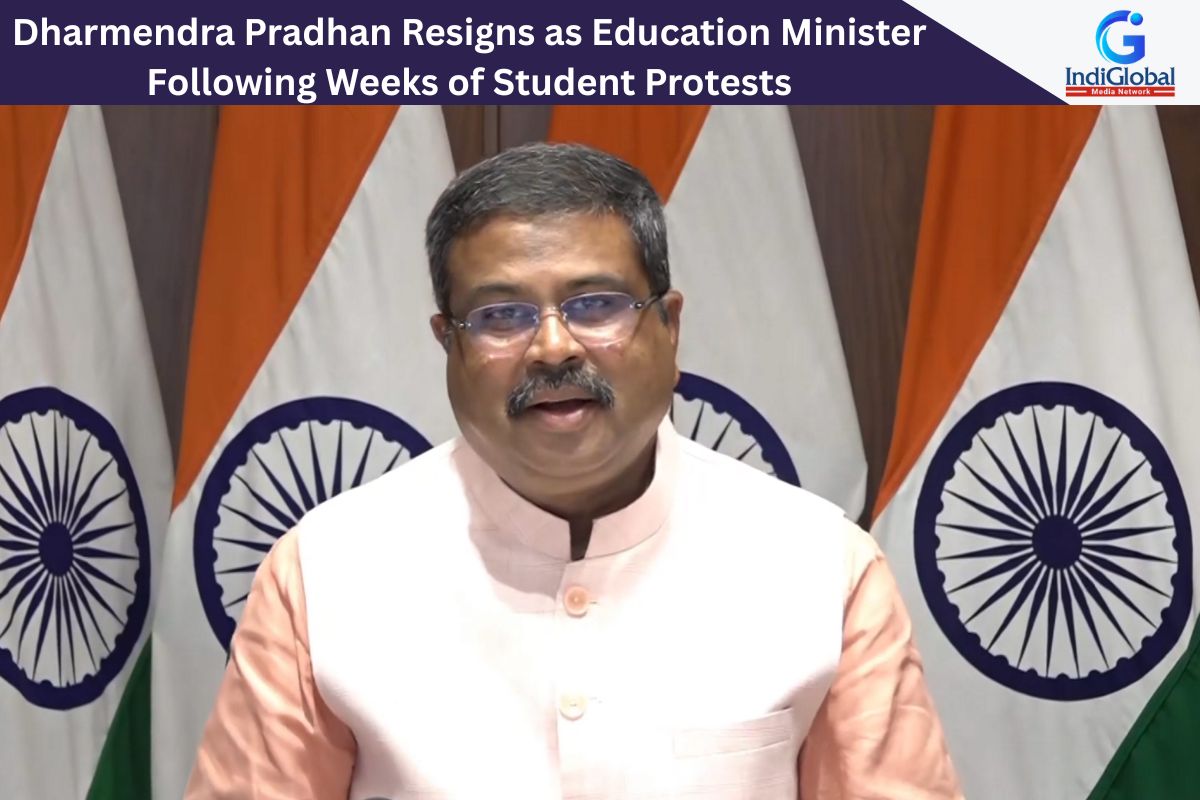
Union Education Minister Dharmendra Pradhan resigned from his post on Saturday, bringing an end to weeks of uncertainty surrounding the ongoing student protests over alleged examination irregularities and the NEET paper leak controversy. He submitted his resignation to Prime Minister Narendra Modi ahead of a fresh round of talks between the Centre and representatives of the protesting students.
Pradhan announced his decision through a post on X, stating that serving the aspirations of India’s youth had always been a guiding principle of his public life. He also thanked Prime Minister Modi for giving him the opportunity to serve as the country’s Education Minister.
The resignation comes after a month-long protest at Delhi’s Jantar Mantar, where students had been demanding accountability over the NEET controversy. Protesters had identified Pradhan’s resignation as one of their key demands, making it a major point of contention during discussions with the government.
Negotiations between the Centre and the protest representatives had reportedly remained deadlocked over the demand for the minister’s removal. Earlier on Saturday, protest organisers maintained that talks would not move forward unless the government accepted the demand.
Protesters’ Key Demands
The student movement had raised three primary demands:
- Resignation of Union Education Minister Dharmendra Pradhan.
- No legal action against students participating in the protests.
- Compensation for the families of students who allegedly died by suicide in connection with the NEET controversy.
According to the protest organisers, the government had already agreed to the latter two demands during discussions held on Friday, while the issue of the minister’s resignation remained unresolved until Saturday.
In his statement, Pradhan said he respected the aspirations and expectations of India’s youth and reiterated that their future should remain the country’s top priority. He added that his decision was taken in the interest of maintaining social harmony and ensuring that students could focus on their education and careers without prolonged uncertainty.
Also Read:- IIT Delhi Opens New Doors for NIT Students, Creating Pathways to Higher Studies and Research
He also expressed gratitude to Prime Minister Modi and colleagues for their support during his tenure as Education Minister.
News of the resignation sparked celebrations at the protest site in New Delhi, where students and organisers welcomed the development. Protest leaders described the resignation as a significant moment for the movement and said it reflected the impact of sustained student mobilisation.
The protests, which gradually spread to several cities across the country, had become one of the biggest education-related movements in recent years, drawing attention to concerns over examination transparency, student welfare and accountability in the education system.
The resignation is expected to have wider political and administrative implications as the government prepares to address the remaining issues related to examination reforms and the future of India’s competitive entrance examination framework.