

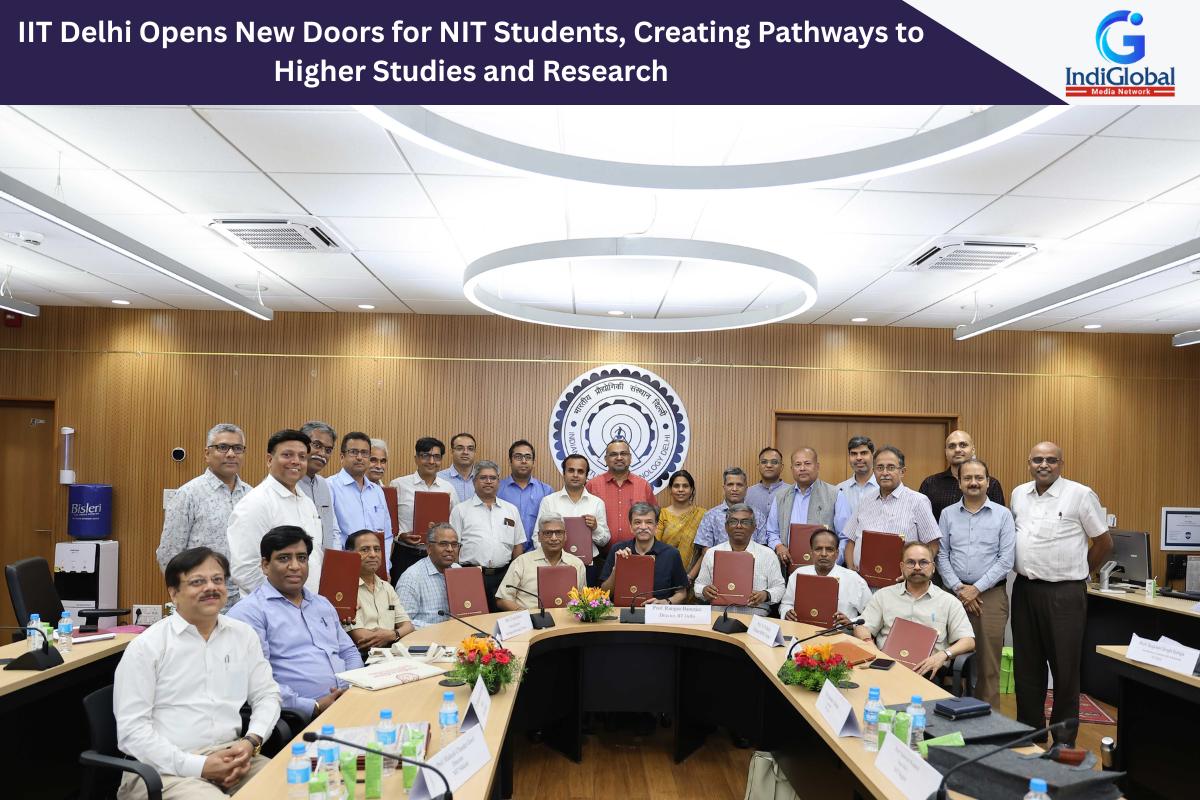
Delhi: In a significant step toward strengthening India’s higher education ecosystem, the Indian Institute of Technology Delhi (IIT Delhi) has signed Memorandums of Understanding (MoUs) with 18 National Institutes of Technology (NITs), creating new opportunities for student exchange, collaborative research, and seamless progression to higher studies. The initiative is expected to benefit thousands of engineering students across the country by breaking down institutional barriers and fostering greater academic mobility.
Launched under the ALIGN (Accelerated Learning and Integration through Global and National Partnerships) initiative, the collaboration aims to bring some of India’s leading technical institutions closer together. The partnership focuses on strengthening research networks, encouraging faculty collaboration, and providing students with exposure to diverse academic environments.
One of the most impactful aspects of the initiative is the creation of new pathways for high-performing NIT students to pursue advanced studies at IIT Delhi. Under an Early Admission Scheme, eligible final-year students from participating NITs will be able to apply for MTech, MS (Research), and PhD programmes at IIT Delhi without having to qualify through traditional national-level entrance examinations such as GATE. This move is expected to reduce academic hurdles and help talented students transition more smoothly into research and postgraduate education.
The collaboration will also introduce a credit transfer mechanism, allowing students to undertake courses and academic activities across participating institutions while ensuring that their academic credits are recognized. Such measures align closely with the vision of the National Education Policy (NEP) 2020, which emphasizes flexibility, interdisciplinary learning, and institutional collaboration.
Beyond academics, the initiative carries a larger message about the future of Indian higher education. For students in NITs, especially those aspiring to pursue cutting-edge research or advanced technical education, the agreement offers access to broader opportunities and stronger academic networks. It also encourages institutions to share resources, expertise, and innovation capabilities rather than functioning in isolation.
As India seeks to build a globally competitive talent pool, collaborations such as these could play a vital role in nurturing future researchers, innovators, and technology leaders. For many students, the IIT Delhi-NIT partnership is more than just an institutional agreement, it represents a chance to dream bigger and access opportunities that were once difficult to reach.