

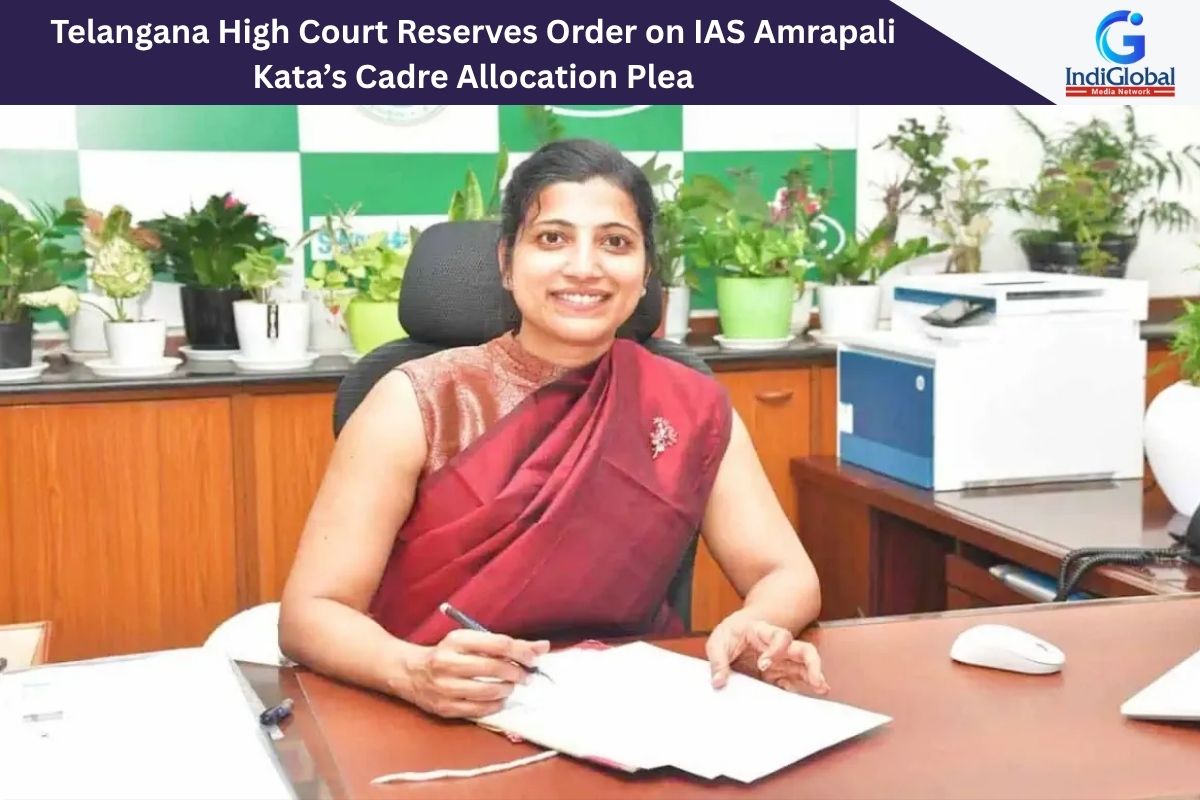
The cadre allocation dispute involving IAS officer Amrapali Kata has reached another important stage, with the Telangana High Court reserving its order on her request to lift an interim stay on a tribunal ruling that had directed her allocation to Telangana.
A division bench comprising Justices Moushumi Bhattacharya and Renuka Yara heard arguments from Amrapali and the Union Government on October 13. The bench indicated that an order could follow within two weeks. As of this report, a subsequent ruling has not been independently verified.
How the dispute developed
The case traces its origins to the allocation of All India Services officers after the bifurcation of undivided Andhra Pradesh in 2014. Amrapali, a 2010 batch IAS officer, challenged her allocation to the Andhra Pradesh cadre and sought assignment to Telangana.
Also Read:- Centre Appoints IPS Officer Shrihari Pandey as Deputy Inspector General in CRPF
The Central Administrative Tribunal granted relief to her in June 2025. However, the Union Government challenged the tribunal’s decision before the High Court, which stayed its implementation in December 2025. Amrapali subsequently sought to have that interim stay lifted.
What both sides argued
According to reports of the hearing, Amrapali’s counsel argued that the original allocation process had treated certain officers incorrectly under the insider and outsider classifications, affecting the distribution of posts between the two states. The plea sought to allow the tribunal’s order to take effect.
The Centre opposed the request, arguing that the classification questions raised were not directly challenged in the proceedings and did not justify the relief sought. After hearing both sides, the bench reserved its order.
Why the decision matters
The outcome is significant not only for Amrapali’s service allocation but also for the wider debate over how officers were distributed between the successor states. Cadre allocation determines the state in which an IAS officer ordinarily serves and can shape long-term administrative assignments.
For now, the legal position remains unresolved in the absence of a verified fresh order. The next development to watch is the High Court’s ruling on the interim stay and the related cadre allocation dispute.