

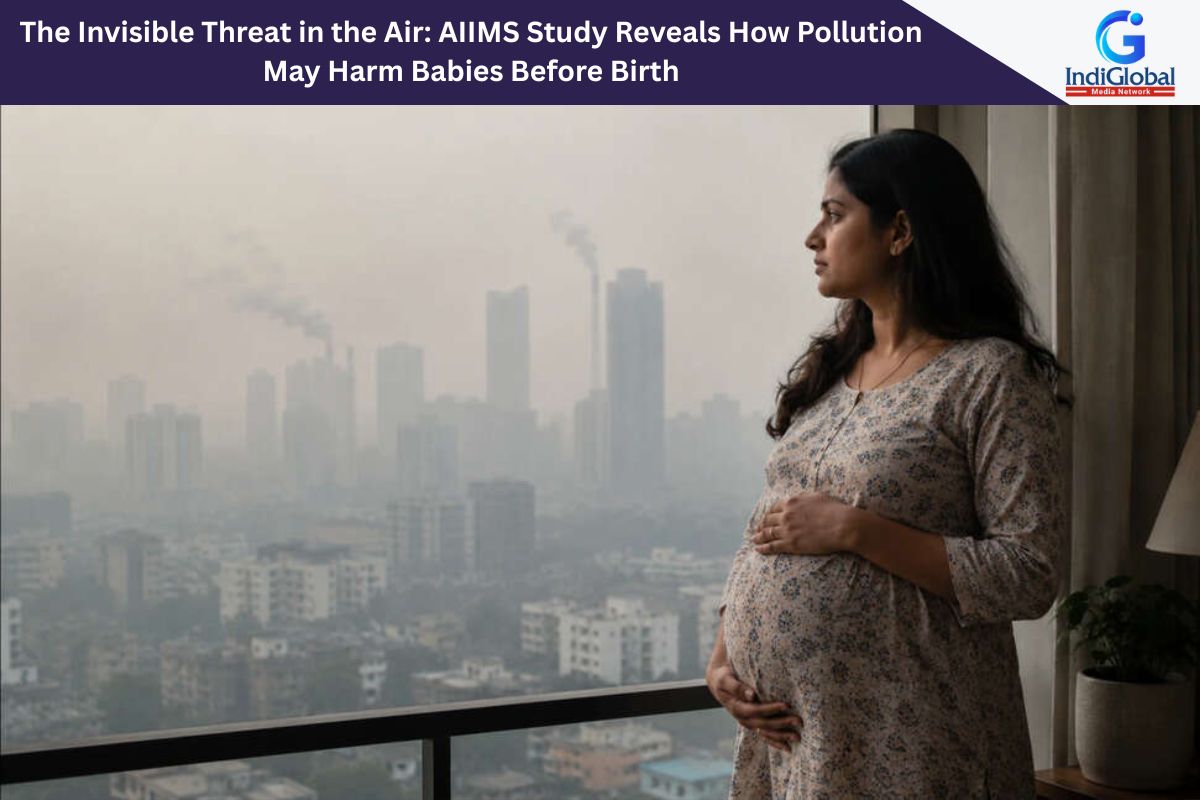
Delhi: Air pollution has long been associated with respiratory illnesses and heart disease, but a groundbreaking study by researchers at the All India Institute of Medical Sciences (AIIMS), New Delhi, has uncovered a far more alarming consequence, its potential impact on unborn children. The findings suggest that polluted air may not only affect pregnant women but could also alter a baby’s development even before birth, raising serious concerns about the long-term health effects of India’s worsening air quality.
Published in the journal EMBO Molecular Medicine, the study examined the effects of fine particulate matter, commonly known as PM2.5 and PM10. Researchers found that these microscopic pollution particles can cross the placental barrier, triggering inflammation and oxidative stress that interfere with the placenta’s ability to provide oxygen and nutrients to the developing fetus. As a result, critical functions such as blood vessel formation, nutrient transport, and healthy fetal growth can be disrupted.
One of the study’s most concerning discoveries was the presence of toxic metals, including lead, cadmium, and antimony, in placental tissue. Researchers believe these pollutants may directly reach the fetus, potentially affecting growth and neurological development. The team also identified a key gene known as IGFBP3, essential for fetal development, that becomes suppressed when exposed to pollution-induced inflammation. This disruption may help explain the higher rates of low birth weight and pregnancy complications observed in heavily polluted regions.
The research extended beyond laboratory analysis. Scientists studied 994 pregnancies and found that higher exposure to PM2.5 was linked to an increased risk of low birth weight and preeclampsia, a potentially dangerous pregnancy complication characterized by high blood pressure. Animal studies further revealed smaller litter sizes, abnormal placental development, reduced birth weight, and developmental changes that continued after birth.
What makes this study particularly significant is that it moves beyond simply identifying a correlation between pollution and poor birth outcomes. It explains the biological mechanisms through which polluted air can influence fetal growth and development. Experts say these findings add urgency to calls for stronger pollution-control measures, especially in urban areas where pregnant women are routinely exposed to hazardous air quality levels.
For expectant parents, the study serves as a powerful reminder that air pollution is not merely an environmental issue, it is a public health challenge that may affect the next generation before they even take their first breath. As India continues to grapple with air quality concerns, the research underscores the need to view cleaner air as an investment in the health and future of children yet to be born.