

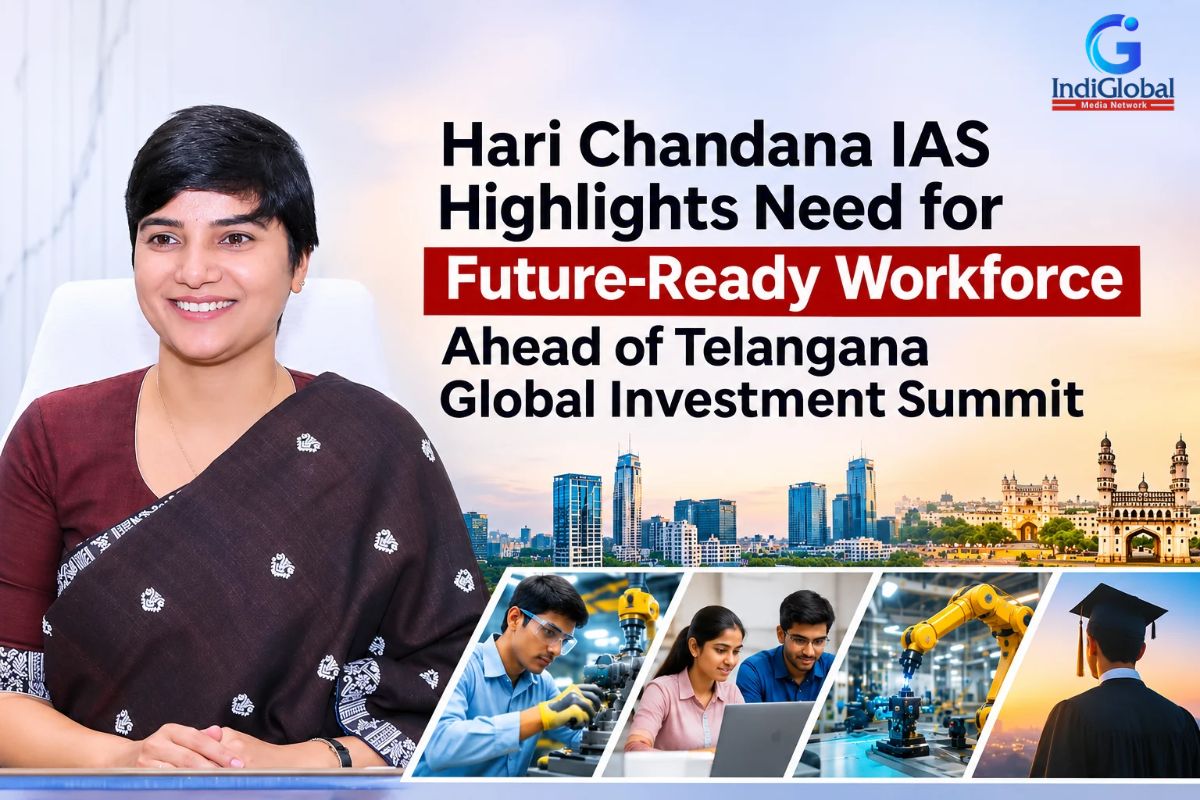
As Telangana prepares for the Invest Telangana Global Summit in December, senior IAS officer Hari Chandana has drawn attention to an important question: how can the state ensure that investment-led growth translates into meaningful employment opportunities for its young people?
Reflecting on the summit’s curtain-raiser in New Delhi in a LinkedIn post, Hari Chandana highlighted the need to anticipate the skills that emerging industries will require. Her observations place workforce readiness alongside investment attraction in the broader conversation about Telangana’s economic future.
Investment and employment must move together
Large investments can bring new facilities, technologies and business opportunities. Their impact on local employment, however, also depends on whether jobseekers possess the skills employers need. Advanced manufacturing, digital technologies and other emerging sectors may demand specialised capabilities that training institutions must begin developing well before recruitment starts.
The challenge is not simply to increase the number of trained candidates. It is to ensure that training remains relevant as industries and job roles change.
Role of technical and skilling institutions
Hari Chandana referred to Industrial Training Institutes, Advanced Technology Centres and Young India Skills University as part of the institutions that can help prepare the workforce for future demand. The wider policy question is how such institutions can engage with employers, update courses and strengthen practical learning in anticipation of the next generation of jobs.
Also Read:- From Collector to Coach: IAS Hari Chandana Dasari is Mentoring the Next Generation of UPSC Aspirants
Industry collaboration can help training providers understand workplace requirements, but lasting results depend on sustained curriculum development, apprenticeships, effective teaching and measurable employment outcomes.
Beyond investment announcements
The Invest Telangana Global Summit is scheduled for December 7 to 9 at Bharat Future City. As the state seeks to attract investors, the longer-term test will be how announced projects progress, how many jobs they generate and whether young people across Telangana are equipped to compete for those opportunities.
Hari Chandana’s observations add a people-centred dimension to the investment debate. Economic ambition and workforce preparation are closely linked: one creates the potential for new opportunities, while the other helps determine who can benefit from them.
For students and jobseekers, the significance of investment-led development will ultimately be reflected not only in the projects announced, but in accessible, sustainable careers.