

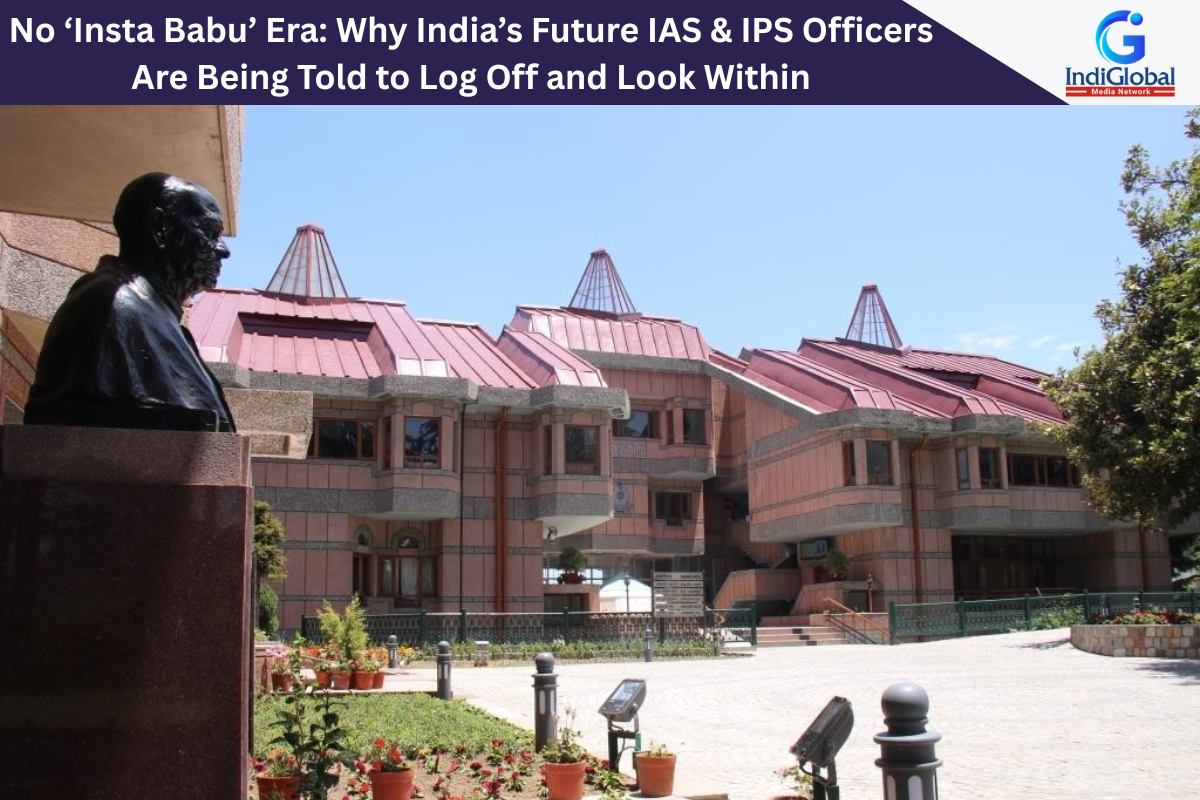
In an age where visibility often equals influence, India’s premier civil services academy has delivered a clear and somewhat surprising message to its newest recruits: public service is not a performance.
The Lal Bahadur Shastri National Academy of Administration (LBSNAA), nestled in Mussoorie, has issued fresh guidelines to nearly 958 newly selected civil service candidates, urging them to steer clear of social media self-promotion and focus instead on integrity, discipline, and institutional responsibility.
A gentle warning in a digital age
The advisory comes at a time when a growing number of young bureaucrats have built strong online personas, sharing their journeys, daily work, and personal stories with thousands, sometimes millions, of followers.
But LBSNAA’s message is firm:
the badge of a civil servant should not become a brand.
New officers have been asked to prioritise institutional integrity over personal visibility, and to avoid posts that may lead to misunderstandings or attract unnecessary criticism.
They are also encouraged to pause before posting, recognising that every online action reflects not just on them, but on the service they represent.
Beyond social media: shaping a mindset
The guidelines go far beyond Instagram and X.
They touch on something deeper, what it means to be a public servant.
From maintaining high moral standards in personal life to dressing modestly and behaving with dignity in public, the academy is setting expectations early.
The message is simple but powerful:
Before you serve the public, you must embody the values of the system you represent.
Why now? The rise of the ‘viral officer’
In recent years, a new trend has emerged, young IAS and IPS officers gaining popularity online, sometimes even becoming influencers.
While this visibility has helped humanise governance and inspire aspirants, it has also raised concerns:
Can public service remain neutral if officers build personal brands?
Does visibility risk overshadowing accountability?
The academy’s advisory appears to be a response to this evolving reality, what some are calling the end of the “Insta Babu” culture.
The human side of the decision
For many of these 958 candidates, this moment marks the culmination of years, often decades, of hard work, sacrifice, and quiet determination.
Some studied under streetlights.
Some balanced jobs with preparation.
Some failed multiple times before finally succeeding.
And now, just as the world is ready to celebrate them, they are being told to step back from the spotlight.
But perhaps that’s the point.
Public service, at its core, has never been about applause, it has always been about responsibility.
A larger message for society
This isn’t just about civil servants, it reflects a broader tension in today’s world:
Can you serve quietly in a culture that rewards visibility?
LBSNAA seems to believe the answer must be yes.
The takeaway
This new guideline is less about restricting expression and more about redefining priorities.
Because in the end, the academy isn’t just training officers it’s shaping individuals who will one day make decisions affecting millions.
And in that role, credibility may matter more than popularity.