

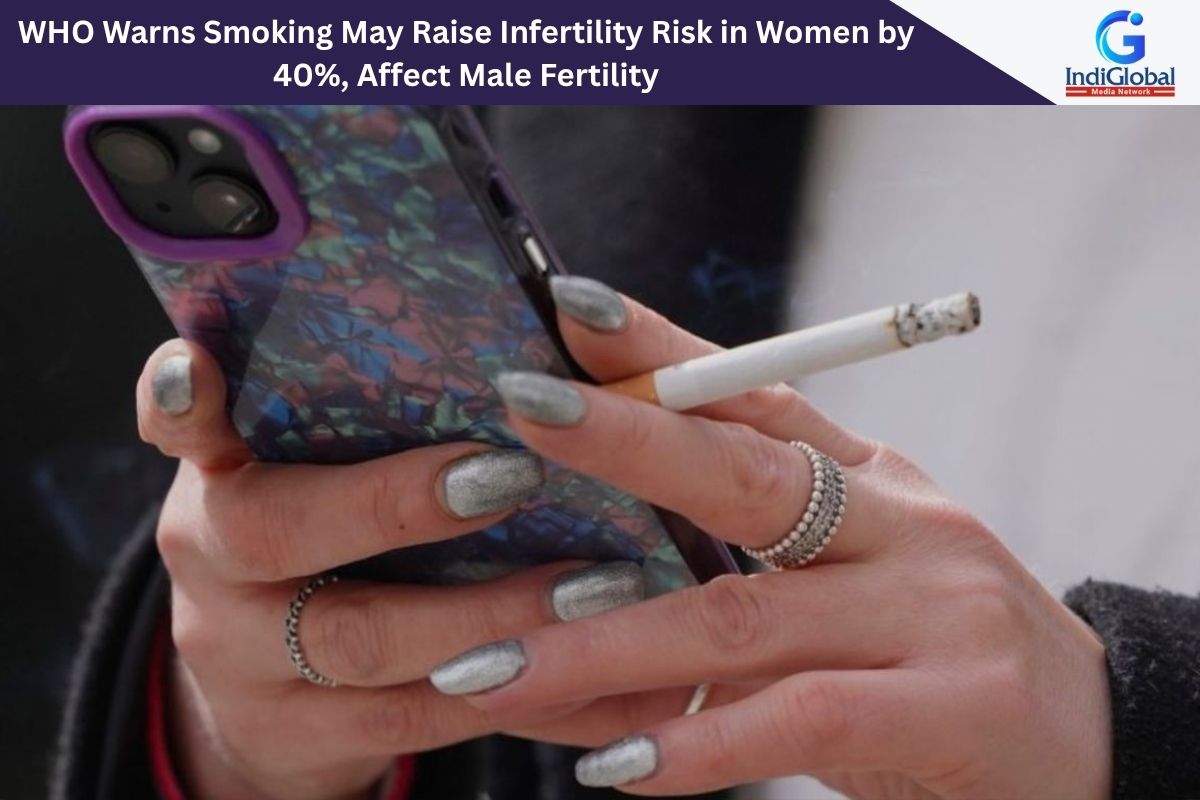
The World Health Organization (WHO) has warned that tobacco smoking could significantly affect reproductive health, with women who currently smoke facing a 40% higher risk of infertility compared with women who do not smoke.
The finding comes from WHO’s newly released knowledge summary, Tobacco and Infertility, which brings together current evidence on the relationship between tobacco use and reproductive health. WHO says infertility affects approximately one in six people of reproductive age globally.
The evidence indicates that the reproductive impact of smoking is not confined to women. A review covering 44 studies and more than 60,000 men found associations between smoking and reproductive dysfunction, including abnormalities in semen as well as sexual dysfunction. Poor sperm motility and abnormal sperm shape were among the problems identified.
Quitting Could Make a Difference
Importantly, WHO’s review also points towards the potential benefits of quitting. Women who had previously smoked but were no longer smoking were found to have a 25% lower risk of infertility compared with women who continued to smoke, suggesting that smoking cessation could make a meaningful difference to reproductive health.
The implications could be particularly important for couples undergoing fertility treatment. WHO cites earlier research involving 21 studies linking cigarette smoking with fewer pregnancies and live births following assisted reproductive procedures such as IVF. The findings suggest successful outcomes could be substantially reduced among smokers.
Second-Hand Smoke Also a Concern
WHO has also drawn attention to second-hand tobacco smoke, warning that reproductive risks may extend to people who do not smoke themselves.
Women exposed to second-hand smoke may face an increased risk of infertility and a reduced likelihood of conceiving during each month they attempt pregnancy, according to the evidence reviewed by WHO.
What About Vaping and Hookah?
The WHO report also examines newer tobacco and nicotine products, including e-cigarettes, waterpipes and smokeless tobacco.
However, WHO makes an important distinction: the evidence is currently strongest for cigarette smoking, while research into the reproductive effects of e-cigarettes, waterpipes and other products remains limited and is still emerging. Further studies are needed to establish their long-term impact on fertility.
Reproductive Health Enters the Tobacco-Control Conversation
The latest evidence broadens the tobacco debate beyond its well-established links with cancer, cardiovascular and respiratory diseases.
WHO is calling on healthcare professionals to discuss tobacco-related reproductive risks with individuals and couples planning pregnancy and to provide evidence-based support for people who want to quit.
With infertility already affecting millions of couples worldwide, the new findings put another preventable health risk under the spotlight: tobacco exposure may affect not only an individual’s present health, but also their chances of becoming a parent.
Source: World Health Organization, Tobacco and Infertility, September 2026