
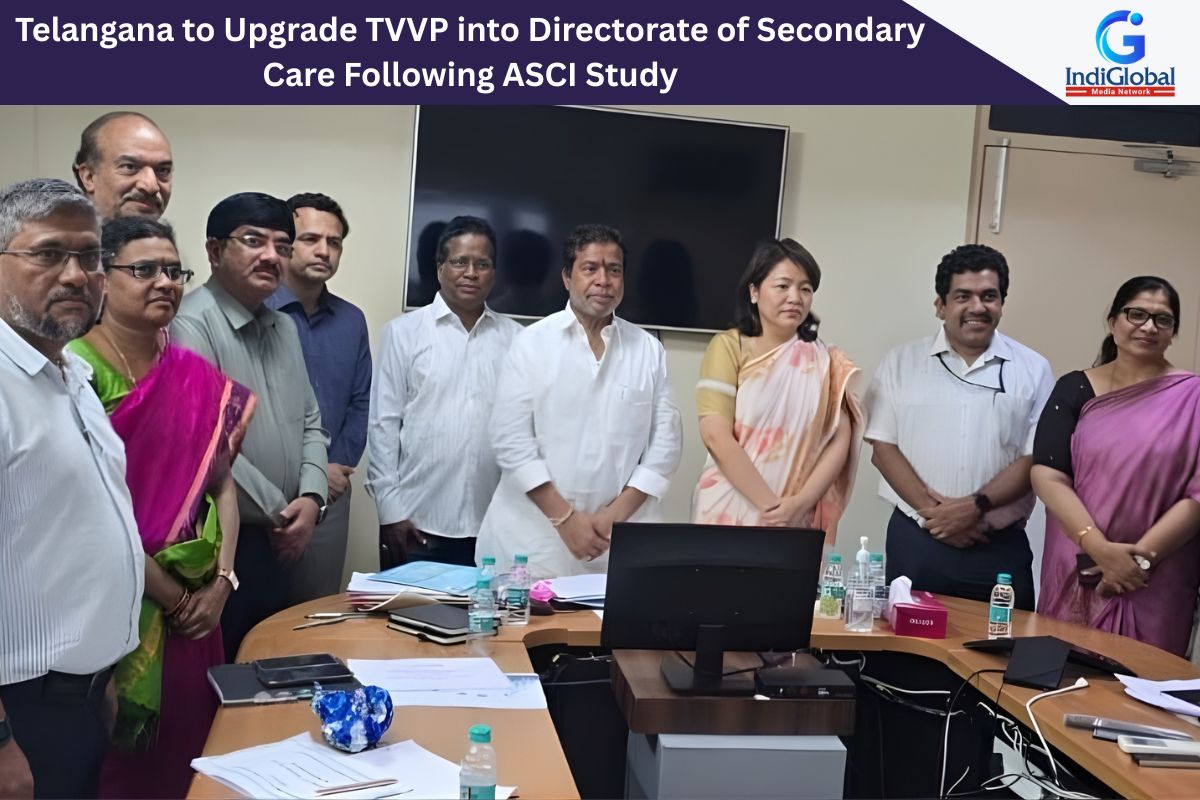
Hyderabad: In a significant administrative reform aimed at strengthening public healthcare delivery, the Telangana government has decided to convert the Telangana Vaidya Vidhana Parishad (TVVP) into a Directorate of Secondary Care. The move follows a comprehensive institutional study conducted by the Administrative Staff College of India (ASCI), reinforcing the state’s emphasis on research-driven governance.
TVVP oversees secondary-level government hospitals across Telangana, including district hospitals, area hospitals and community health centres. These facilities form the backbone of specialist and referral care, bridging primary health centres and tertiary teaching hospitals. They manage a substantial share of outpatient consultations, inpatient admissions, surgeries, diagnostics and the implementation of national health programmes.
The restructuring is expected to streamline administrative processes, ensure smoother financial flows, strengthen accountability and improve coordination within the Health Department. Officials believe directorate status will enhance policy supervision and operational efficiency across the state’s secondary care network.
Welcoming the decision, Prof. Dr. Subodh Kandamuthan, Director – Dr Kakarla Subbarao Centre for Healthcare Management & Programme Director at ASCI, described the development as a milestone in evidence-based policymaking.

“It’s always a truly proud moment when the research work conducted by us in our Health Care Centre at ASCI contributes to policy decisions. The Telangana Government has decided to convert the Telangana Vaidya Vidhana Parishad into the Directorate of Secondary Care based on a detailed study by ASCI. We wish to thank the Health Department of Telangana, TVVP and also our colleagues in the Centre,” he said.
The ASCI study reportedly examined governance structures, financial management systems, service delivery gaps and institutional overlaps before recommending a more integrated directorate model to strengthen responsiveness and efficiency.
With over 180 hospitals under its ambit, the reform marks a structural shift in how secondary healthcare is administered in Telangana. Health policy observers view it as a step toward reinforcing district-level medical infrastructure, reducing pressure on tertiary institutions and ensuring accessible specialist care closer to communities.