
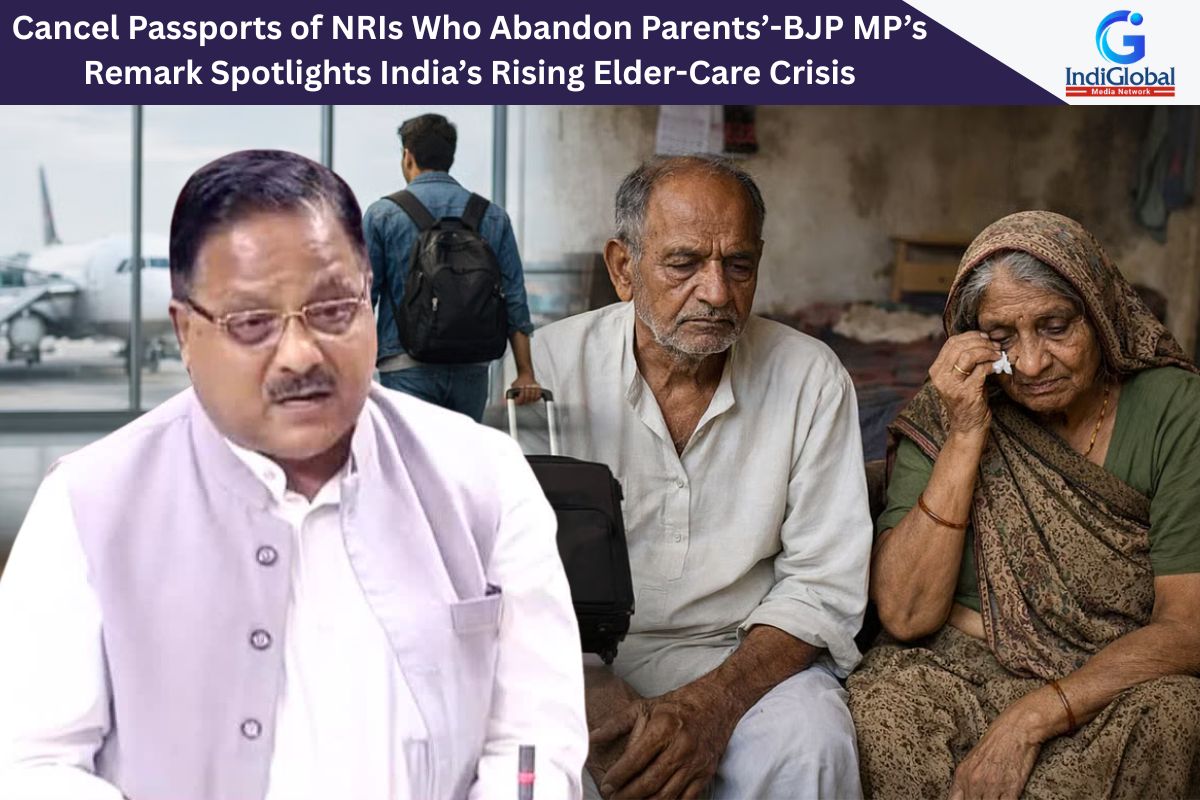
New Delhi: A recent statement by BJP Rajya Sabha MP Radha Mohan Das Agrawal, suggesting strict action against children who move abroad and allegedly neglect their ageing parents, has triggered widespread debate across India. While his call to “cancel passports” drew sharp reactions, it has also brought attention to a deeper structural issue: India is ageing rapidly, and traditional family-based support systems are under strain due to migration, urbanisation, and changing lifestyles.
The controversy has therefore moved beyond politics into the realm of demographics, social policy, and the future of elder care in India.
India’s Ageing Reality
India is undergoing a silent demographic transition. The country had just over 100 million people aged 60 and above in 2011. That number has already grown significantly and is projected to cross 230 million by 2036 and may approach 320 million by 2050. In simple terms, nearly one in five Indians will soon be a senior citizen.
This rise is driven by two positive developments, longer life expectancy and declining fertility-but it also means India must prepare for a much larger dependent elderly population than ever before.
From Joint Families to Fragmented Households
For generations, India relied on the joint-family system to care for elders. Economic liberalisation and global opportunities, however, have reshaped that model. Younger Indians increasingly migrate to metros or overseas for education, employment, and entrepreneurship, often leaving parents behind.
Recent surveys suggest a growing share of elderly Indians now live alone or only with a spouse, rather than with children. In urban areas, this trend is even more pronounced. What was once a culture of intergenerational cohabitation is gradually shifting toward “solo ageing.”
This is the social reality the MP referred to while raising concerns in Parliament-parents investing their life savings to educate children who later settle abroad, sometimes resulting in emotional and physical isolation for the elderly.
Economic and Health Vulnerabilities
Ageing in India is not just a social issue; it is also an economic one. A large proportion of senior citizens depend financially on family members, as pension coverage remains limited, especially in the informal sector where most Indians have worked.
Studies indicate that many elderly persons lack independent income and face healthcare challenges, with chronic illnesses such as diabetes, hypertension, and mobility disorders becoming common after 60. Without nearby family support, managing these conditions becomes significantly harder.
Women face an even greater burden. A majority of elderly women outlive their spouses and may lack financial security, making them more vulnerable to neglect or dependency.
Legal Safeguards Exist-but Awareness Is Low
India already has a legal framework-the Maintenance and Welfare of Parents and Senior Citizens Act, 2007-which makes it a legal obligation for children to provide financial support to parents. However, awareness and enforcement remain limited, and many seniors hesitate to initiate legal proceedings against their own children.
Experts note that while laws exist, implementation gaps, social stigma, and procedural barriers prevent many elderly individuals from seeking protection.
Migration, Aspiration, and an Unintended Consequence
India’s global diaspora is one of its greatest strengths, contributing remittances, innovation, and international influence. Yet large-scale migration has created a paradox: economic mobility for the young sometimes translates into emotional insecurity for the old.
Urbanisation, smaller families, and demanding careers further reduce the ability of children-whether in Bengaluru or Boston-to provide day-to-day care. Technology enables connection, but it cannot replace physical presence in times of illness, emergency, or loneliness.
The Policy Question Ahead
Agrawal’s remarks, though controversial in tone, have opened a critical policy conversation: how should India prepare for a future where family-based elder care can no longer be assumed?
Experts suggest the need for:
. Expanded community-based elder-care systems
. Geriatric healthcare infrastructure at district level
. Social security and pension reforms
. Assisted-living and day-care models for seniors
. Greater awareness of legal rights and responsibilities
India stands at a demographic crossroads. As the nation grows younger economically, it is simultaneously growing older socially. The debate sparked by the BJP MP’s statement is ultimately about balancing aspiration with responsibility-ensuring that the pursuit of global opportunities does not leave behind a generation that once made those opportunities possible.
The challenge ahead is not merely to enforce duty, but to redesign systems so that ageing in India is supported not just by families, but by institutions, communities, and policy frameworks suited to a rapidly changing society.