

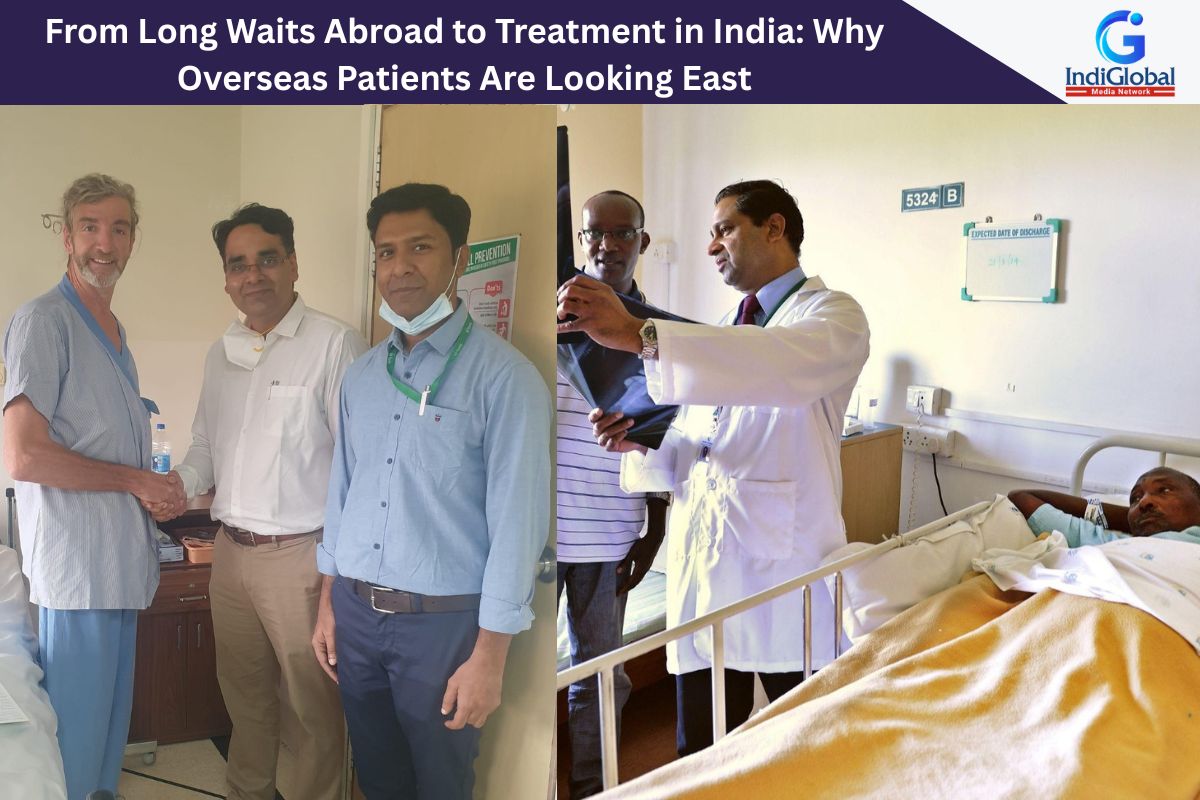
New Delhi: For decades, patients from developing countries travelled to Europe, the United Kingdom and the United States in search of advanced medical treatment.
That picture is gradually changing.
Patients from some of the world’s wealthiest countries are now exploring treatment outside their own healthcare systems, particularly when they are confronted with long waiting periods or high private healthcare costs. India is increasingly figuring in those choices.
A recent social media post about a British citizen who reportedly travelled to India for double knee replacement surgery has brought the issue into focus again.
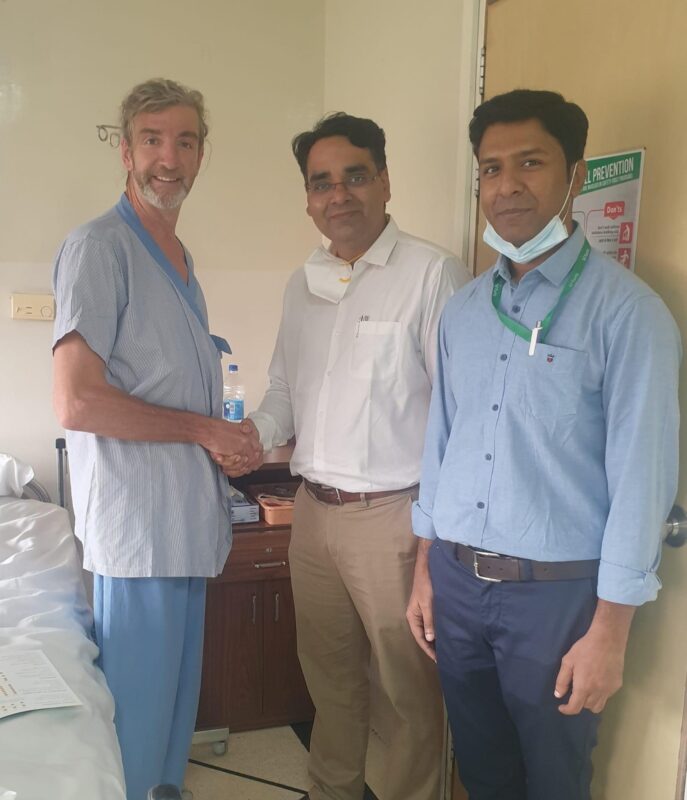
According to the widely circulated account, the patient was facing a prolonged wait for treatment in the United Kingdom. The post claims that his complete treatment in India, including surgery, travel and recovery, cost around ₹18 lakh, compared with an estimated ₹51 lakh for private treatment in the UK.
IndiGlobal Media Network has not independently verified the individual treatment costs or the circumstances surrounding this particular case. However, the larger trend it represents is supported by official data.
For patients facing long waits for elective procedures or expensive private treatment in their home countries, travelling overseas for healthcare is becoming a serious alternative.
India has an important advantage in this space. It offers experienced specialists, large multispeciality hospitals, advanced medical technology and comparatively affordable treatment. In several cases, international patients may also be able to access elective procedures considerably faster.
When Waiting for Treatment Becomes Part of the Problem
The issue is particularly relevant in countries such as the United Kingdom, where waiting times for elective healthcare have remained a major public concern.
For someone suffering from severe knee or hip problems, waiting for treatment is not simply about a date on a hospital calendar.
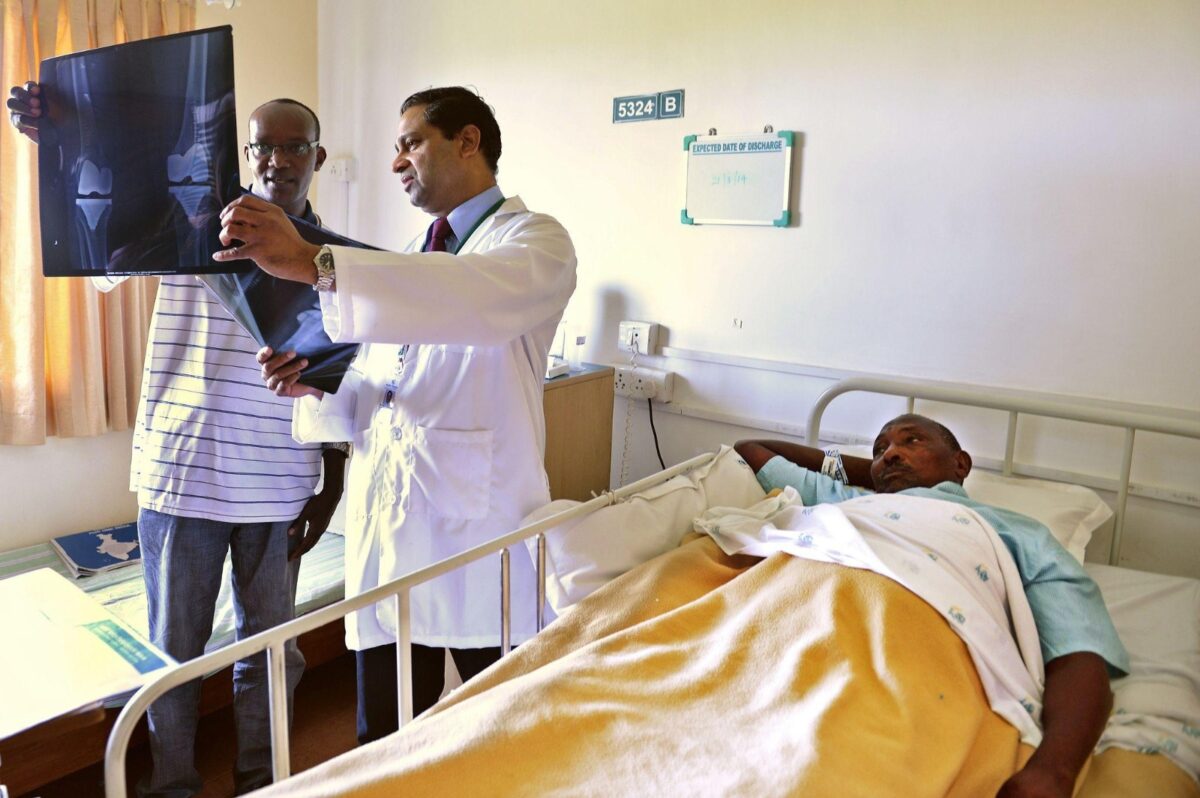
It can mean months of pain, restricted mobility, difficulty working, dependence on medication and a significant impact on everyday life.
Private healthcare can provide another option, but the cost of complex procedures can be substantial.
For patients who have the financial ability and medical fitness to travel, another possibility therefore opens up: seeking treatment overseas.
India has emerged as one of the countries benefiting from this shift.
India’s Advantage Goes Beyond Cost
India has long been associated with affordable medical treatment. But cost alone does not explain why hundreds of thousands of international patients continue to travel to the country.
Indian hospitals today perform complex procedures across orthopaedics, cardiology, oncology, neurosciences, organ transplantation, fertility treatment and several other specialties.
Many leading hospitals have invested heavily in robotic surgery, advanced diagnostics, critical care, precision medicine and specialised centres of excellence.
India’s proposition to an overseas patient is increasingly based on four factors: medical expertise, technology, access to treatment and cost.
For patients comparing healthcare options across countries, that combination can be significant.
Nearly Seven Lakh Medical Visitors Before the Pandemic
Official figures demonstrate the scale of India’s medical travel sector.
India received approximately 6.97 lakh foreign visitors for medical purposes in 2019.
The pandemic brought international patient movement to a near standstill, with the number falling to approximately 1.83 lakh in 2020.
The recovery thereafter was substantial.
Medical arrivals increased to around 3.24 lakh in 2021 and 4.75 lakh in 2022.
By 2023, approximately 6.59 lakh foreign visitors came to India for medical purposes, bringing the country close to its pre pandemic numbers.
India continued to receive more than 6.44 lakh medical visitors in 2024, according to Government of India data.
The figures show that medical travel to India is not a marginal segment of the tourism industry. It represents hundreds of thousands of healthcare decisions being made by patients and families across different countries.
India as a Regional Healthcare Hub
A significant proportion of India’s international patients continue to come from neighbouring countries and regions where access to specialised medical care can be limited.
Bangladesh has historically been one of India’s largest sources of medical travellers. Patients also arrive from countries across Africa, the Middle East, Central Asia and South Asia.
At the same time, cases involving patients from Britain and other developed economies attract particular attention because the motivation can be different.
For some of these patients, the issue is not the absence of healthcare infrastructure in their own country.
It is the combination of waiting time, affordability and immediate access to specialist treatment.
That distinction makes the development particularly interesting.
Government Push to Make Treatment in India Easier
The Government of India has recognised medical travel as an important opportunity for both healthcare and tourism.
Initiatives such as Heal in India are aimed at making it easier for international patients to identify healthcare providers and access treatment in the country.
India has also introduced medical visa facilities for eligible foreign patients and attendants, while efforts are underway to strengthen coordination between hospitals, facilitators, tourism providers and other stakeholders involved in the international patient journey.
The objective is to make the process of travelling to India for treatment simpler and more transparent.
The Opportunity Is Medical Value, Not Cheap Healthcare
India’s long term opportunity lies in moving away from being described simply as a destination for cheap medical treatment.
Healthcare decisions are fundamentally different from ordinary consumer purchases.
A patient undergoing heart surgery, cancer treatment or a joint replacement will not choose a hospital simply because it is cheaper.
Trust matters.
Clinical outcomes matter.
The reputation of the doctor matters.
Hospital accreditation, patient safety, communication, post treatment support and transparency in pricing all matter.
Cost becomes powerful when it is combined with quality.
That is where India’s larger opportunity lies.
The country has the potential to position itself not merely as an affordable healthcare destination, but as a destination that provides high quality medical care at compelling value.
The recent British knee replacement story is one individual example circulating on social media.
But it raises a much larger question.
If a patient has to wait months for a procedure at home, or pay substantially more for private treatment, how far would that patient be willing to travel for quality healthcare?
For a growing number of international patients, India is becoming part of that decision.