

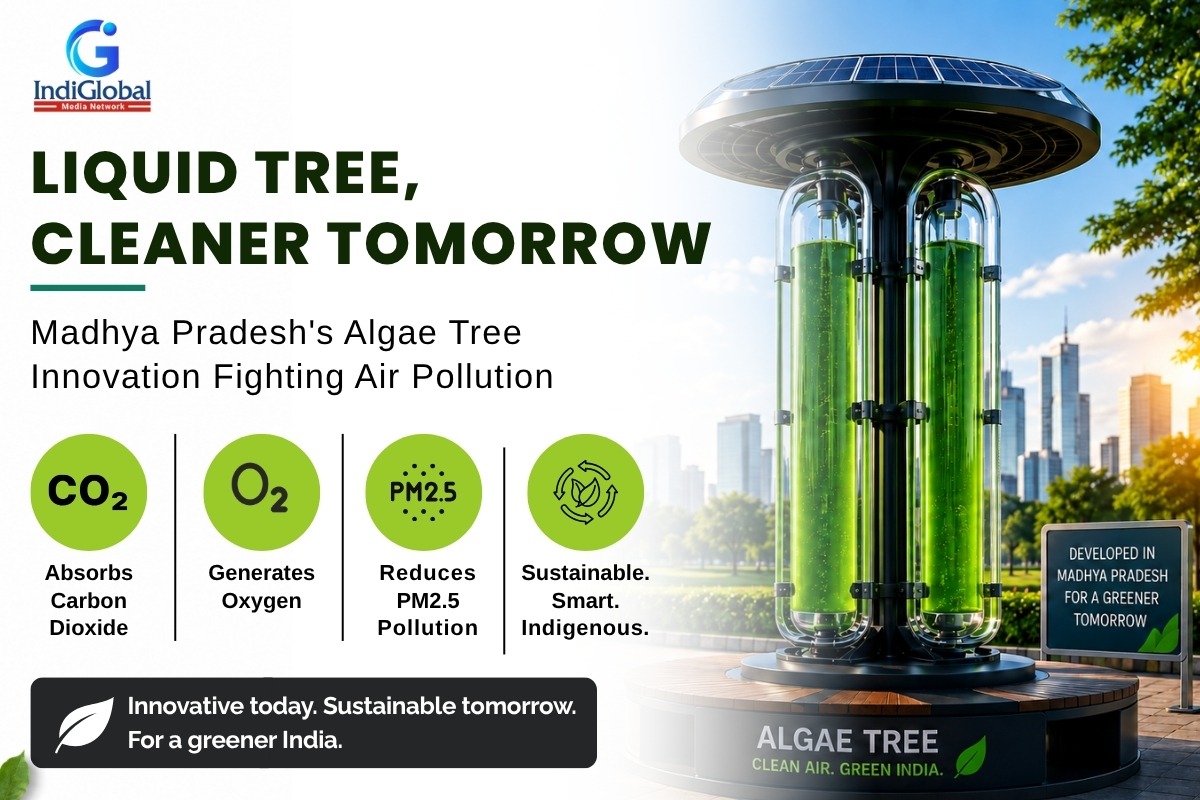
Bhopal: In a major step toward tackling urban air pollution, India’s first “Algae Tree” has been installed in Bhopal. The futuristic pollution-control device, unveiled at Swami Vivekananda Park, uses microalgae technology to absorb carbon dioxide and release oxygen, functioning as a compact artificial tree for crowded urban areas.
Developed by the Mushroom World Group after nearly two years of research, the algae-based system is being hailed as an innovative environmental solution for Indian cities struggling with worsening air quality. According to the developers, one algae tree can perform the carbon absorption work of nearly 25 mature trees while occupying only a fraction of the space.
Unlike conventional trees, the structure is a solar-powered “photobioreactor” filled with water and live microalgae. Through photosynthesis, the algae absorb carbon dioxide from the surrounding air and release oxygen. The system also helps reduce harmful particulate matter such as PM2.5, one of the biggest contributors to respiratory illnesses in Indian cities.
Officials claim the device can absorb around 1.5 tonnes of carbon dioxide annually while generating nearly one tonne of oxygen. It is also expected to reduce PM2.5 pollution levels by 45–55 percent within a 15-metre radius around the unit.
The technology has been specifically designed for densely populated urban locations where planting traditional trees is difficult due to lack of land, underground infrastructure or heavy traffic movement. Experts say such systems can be placed near roads, markets, bus stops and commercial zones to supplement urban greenery.
Environmentalists, however, caution that algae trees should not be viewed as replacements for natural forests. Real trees provide biodiversity support, cooling effects, shade and groundwater benefits that artificial systems cannot fully replicate. Instead, experts describe algae trees as a complementary urban technology that can support existing green initiatives.
The Bhopal installation comes at a time when Indian cities are facing rising temperatures, shrinking green cover and dangerous pollution levels caused by traffic emissions, industrial activity and construction dust. Innovations such as algae trees are now being explored globally as cities search for sustainable climate solutions.
Following the success of the Bhopal project, the developers reportedly plan to expand the technology to other Indian cities in the coming years.