

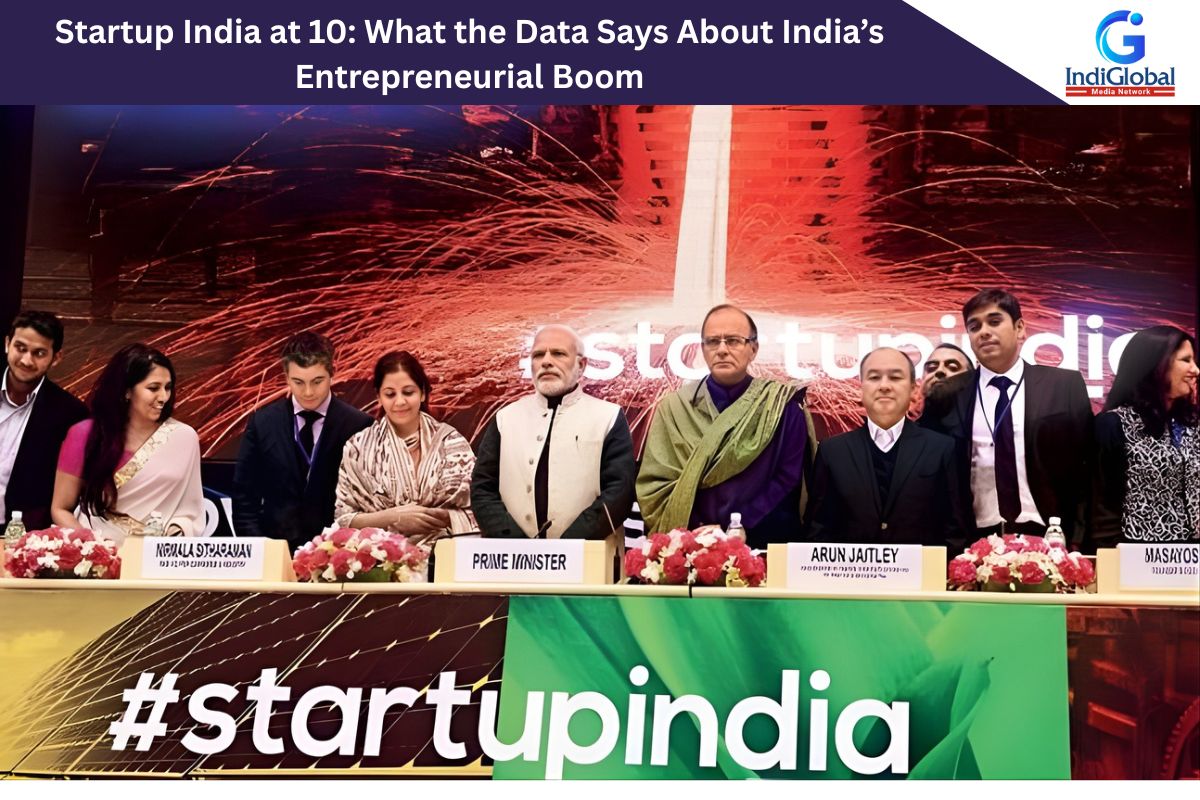
New Delhi : As the Startup India initiative completes a decade, India stands at a defining inflection point in its entrepreneurial journey. What began in 2016 as a policy-driven push to energise innovation has today matured into a nationwide movement, reshaping mindsets, markets, and India’s position in the global startup economy.
Launched by the Government of India, Startup India was never just about creating companies; it was about creating confidence especially among young Indians—that ideas could scale, risks could be rewarded, and innovation could thrive from any corner of the country.
From Policy to Platform: The Early Years (2016-2019)
In its formative phase, Startup India focused on dismantling traditional barriers that had long constrained entrepreneurs:
- Simplified compliance through self-certification
- Tax exemptions and capital gains relief
- Faster patent and IPR support
- Creation of the Fund of Funds for Startups to improve access to capital
This period marked a shift in how entrepreneurship was viewed from a high-risk career detour to a credible economic pathway.
Startups in a Stress Test: The Pandemic Phase (2020-2021)
The COVID-19 years became an unexpected proving ground. Indian startups pivoted rapidly, delivering solutions in health-tech, ed-tech, fintech, logistics, and SaaS.
Also Read:- Transparent ADRE 2.0 Recruitment Brings 4,374 Youth Into Government Service
Government-backed digital infrastructure such as Aadhaar, UPI, and DigiLocker played a critical role in enabling scale at speed.
Far from slowing innovation, the crisis validated India’s startup resilience.
The Unicorn Surge & Global Attention (2021-2023)
India witnessed an unprecedented rise in unicorn startups, becoming the third-largest startup ecosystem globally. Key highlights included:
- Explosive growth in fintech, SaaS, deeptech, EVs, and climate-tech
- Increased participation of women founders
- Rise of tier-2 and tier-3 city startups, reducing metro dominance
Startup India’s focus expanded from quantity to quality, emphasising sustainability, governance, and global competitiveness.
Beyond Metros: Democratising Entrepreneurship
One of the most transformative outcomes of the decade has been the geographic spread of innovation. Startups emerged from cities like Indore, Coimbatore, Guwahati, Jaipur, Kochi, and Bhubaneswar—supported by:
- State startup policies
- Incubators and innovation hubs
- Academic–industry collaboration
This decentralisation ensured that Startup India was not a Delhi-Bengaluru story, but a pan-India narrative.
Startups as Nation Builders
Over ten years, startups have evolved into strategic contributors to national priorities:
- Job creation for millions of youth
- Solutions aligned with Digital India, Make in India, and Atmanirbhar Bharat
- Innovation in public service delivery, agriculture, healthcare, and education
Increasingly, startups are partners in governance, not just market players.
Challenges That Remain
Despite its success, the ecosystem faces structural challenges:
- Funding volatility and longer paths to profitability
- Need for stronger deeptech and R&D commercialisation
- Bridging skill gaps between academia and industry
- Ensuring ethical AI, data protection, and regulatory clarity
The next decade will demand patient capital, policy continuity, and global integration.
The Road Ahead: Startup India 2.0
As Startup India enters its second decade, the focus is clearly shifting towards:
- Innovation-led growth, not valuation-led growth
- Global scale with Indian IP
- Climate, sustainability, and social impact startups
- Stronger public-private-academic collaboration
From idea to IPO, from local problems to global solutions, Startup India has laid the foundation for an entrepreneurial republic.
A Decade On, the Story Is Still Being Written
Ten years ago, Startup India was a bold promise. Today, it is a living ecosystem-powered by risk-takers, supported by policy, and driven by purpose.
The next chapter will decide not just how many startups India creates—but how many world-changing ideas it leads.