
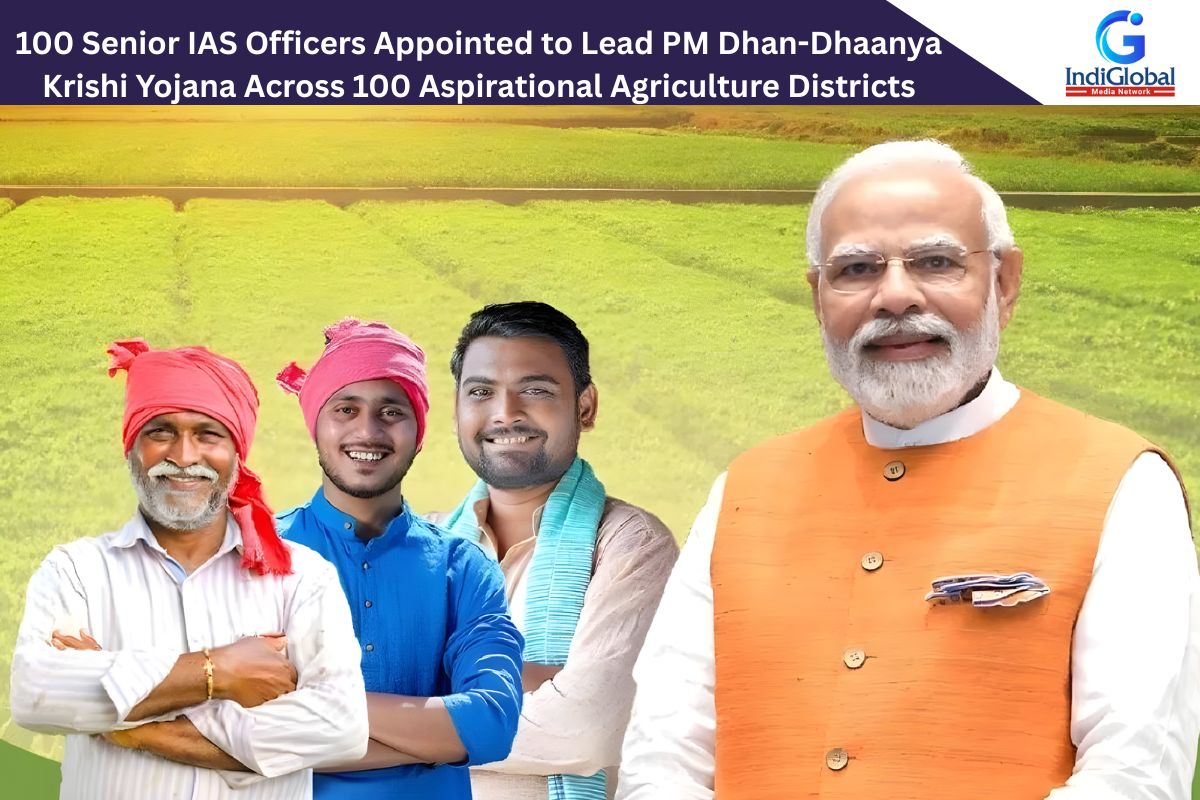
New Delhi: In a landmark move to drive agricultural transformation across India, the Government of India has appointed 100 senior IAS officers, Joint Secretaries, and senior officials as Central Nodal Officers (CNOs) to spearhead the implementation of the Prime Minister Dhan-Dhaanya Krishi Yojana (PMDDKY). Each officer will take charge of one of the 100 Aspirational Agriculture Districts identified under the scheme, spread across 29 states and Union Territories.
The appointment of these senior officers marks a decisive administrative push to ensure on-ground effectiveness, accountability, and real-time monitoring of the ambitious initiative. The officers will coordinate with state governments, local administrations, and agricultural departments to guide the planning and execution of interventions aimed at improving productivity and farmers’ incomes.
The PMDDKY seeks to boost agricultural growth, reduce regional disparities, and promote sustainable farming practices in regions with untapped potential. Interventions under the scheme will focus on modernizing farming techniques, improving irrigation efficiency, promoting climate-resilient crops, and facilitating better access to markets and technology.
Also Read:- Nagaland Bureaucratic Reshuffle: IAS, NCS Officers Transferred in Key Departments
Among the selected districts, Uttar Pradesh leads with 12, followed by Maharashtra with nine, and Madhya Pradesh and Rajasthan with eight each. Other states and Union Territories have also identified districts where targeted efforts will be made to enhance the agricultural ecosystem.
By entrusting senior bureaucrats to lead the mission, the government aims to ensure strong leadership, timely execution, and measurable outcomes. The initiative aligns with the broader national vision of ‘Viksit Bharat 2047’, emphasizing inclusive and technology-driven agricultural development.
Experts believe that the combination of high-level administrative oversight and region-specific interventions under PMDDKY could redefine India’s rural economy and serve as a model for integrated agricultural reform.